
Highlights from the EERIA 2025 Conference in Sarajevo

EERIA Fourth Annual Conference – Photo Gallery
October 2, 2025
New Appointments to the EERIA governance structure for 2026
January 4, 2026
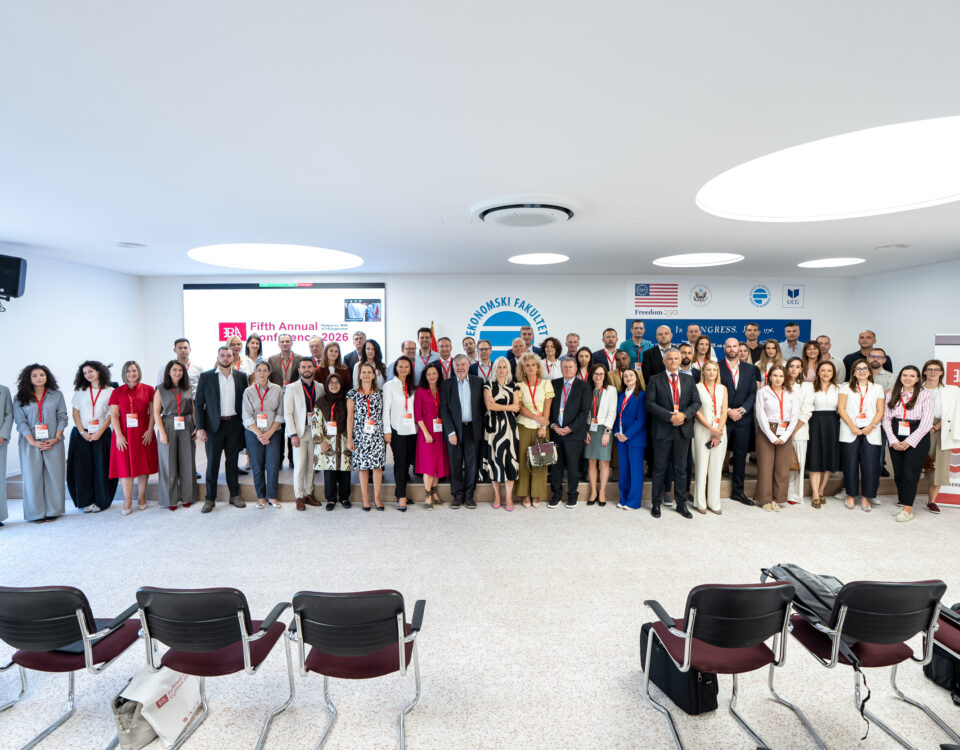
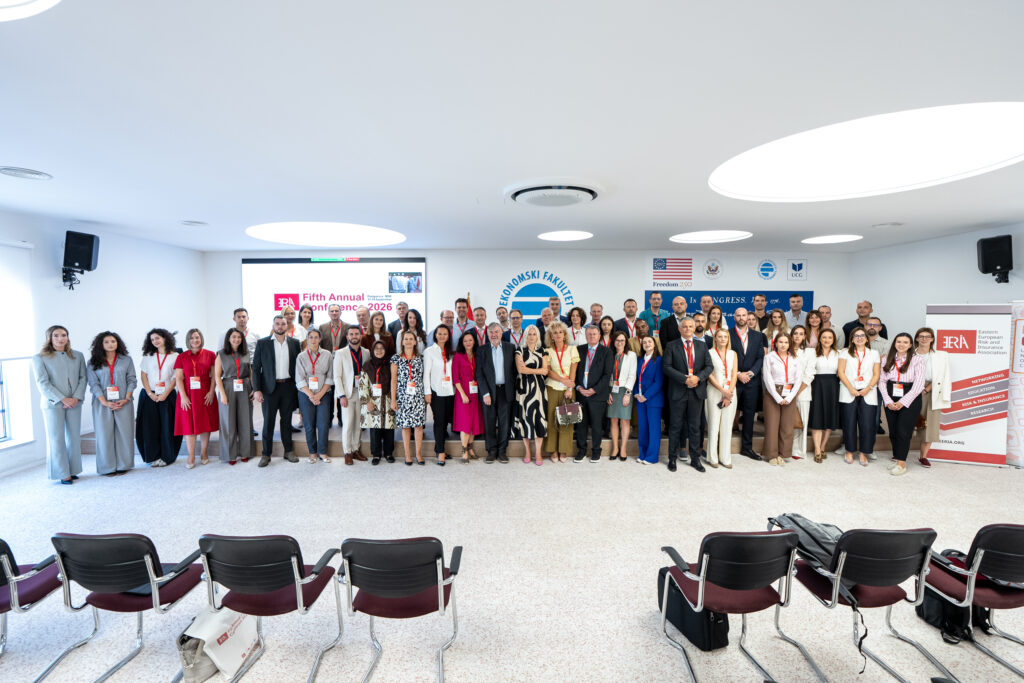
The Fourth Annual Conference of the Eastern European Risk and Insurance Association (EERIA) took place on 25–27 September 2025 at the School of Economics and Business, University of Sarajevo. Over three days, Sarajevo became the meeting point for academics, regulators, policymakers, and industry professionals, all engaged in discussions on the future of insurance and risk in a rapidly changing world.
Opening Session
The conference was opened by Prof. Dr. Meliha Bašić, Dean of the School of Economics and Business in Sarajevo, who emphasised the importance of connecting academia with regulators and practitioners in order to address pressing challenges facing the insurance sector. Her words were complemented by Prof. Dr. Jasmina Selimović, Governor of the Central Bank of Bosnia and Herzegovina, who underlined the significance of financial education in building trust and responsibility among future generations. Prof. Patricia H. Born, President of EERIA and Professor at Florida State University, highlighted the association’s vision of advancing collaboration and knowledge exchange across borders.
Keynote Speeches and Panel
The opening keynote was delivered by Ivan Luburić, Director of the Insurance Supervisory Agency of the Federation of Bosnia and Herzegovina, who spoke about the regulatory and market challenges shaping the regional insurance landscape. His address was followed by a keynote lecture from Prof. Em. Karel Van Hulle (KU Leuven & Goethe University Frankfurt), one of Europe’s leading experts on insurance regulation. His presentation, “The role of insurance in tackling the natural catastrophe protection gap”, resonated strongly with current debates on climate risk and the role of insurance in enhancing societal resilience.
Prof. Van Hulle also moderated a high-level panel on catastrophe insurance, joined by Carlos Guiné (EIOPA), Nic De Maesschalck (BIPAR), Zlatan Filipović (Bosna Re), and Katja Vavpetić (Insurance Supervision Agency of Slovenia). The panel offered a multifaceted perspective on how regulators, insurers, and intermediaries can work together to address protection gaps.
Research Paper Sessions
The heart of the conference was the presentation of academic research, structured into three thematic sessions:
-
Banking and Cross-Sector Dynamics (moderated by Prof. Patricia H. Born) included studies on bancassurance, volatility spillovers between financial sectors, sustainability in banking, and the role of mutuality in shaping insurance markets.
-
Insurance Sector Developments (moderated by Prof. Klime Poposki) covered earthquake risk in Armenia, motor insurance pricing in Bosnia and Herzegovina, literacy and coverage gaps in Croatia, concentration in Central and Eastern European insurance markets, and the dynamics of distribution and “bad faith” in non-life insurance.
-
Digitalisation and Artificial Intelligence in Insurance (moderated by Prof. Piotr Manikowski) highlighted research on market valuation determinants, digitalisation processes in the Czech Republic, ethical aspects of AI in insurance, sales and distribution innovations, insurtech developments, and the concept of “AI insurTechability.”
Together, these sessions showcased the breadth and depth of current research, reflecting the interdisciplinary nature of EERIA’s community.
Special Presentations
Day three featured a special lecture by Jean Pierre Daniel, who presented comparative case studies of public–private partnerships in catastrophe insurance in Spain and France. His insights provided practical perspectives on how different models can enhance coverage and financial resilience against natural disasters.
Memorandum of Cooperation
A particularly important moment of the conference was the signing of a Memorandum of Cooperation between EERIA and the School of Economics and Business, University of Sarajevo. Signed by Prof. Dr. Meliha Bašić and Prof. Patricia H. Born, this agreement lays the groundwork for closer collaboration in research, education, and joint initiatives that will strengthen ties between academia and practice in the fields of economics, finance, and insurance.
Closing Remarks
In his closing address, Prof. Safet Kozarević (University of Tuzla) reflected on the conference’s achievements, stressing that such gatherings do not end with the closing ceremony but continue through sustained collaboration, networking, and policy impact. This message echoed throughout the event: EERIA is not only an academic association but a living community that connects people, disciplines, and sectors in pursuit of a more resilient future.
Symbolism of Sarajevo
Hosting EERIA 2025 in Sarajevo carried particular meaning. As a city known for resilience and renewal, Sarajevo provided both an inspiring backdrop and a reminder of the importance of cooperation in the face of uncertainty. The conference reaffirmed that the insurance sector plays a central role in not only providing protection but also in fostering trust, stability, and innovation across societies.
Looking Ahead
The Fourth Annual Conference of EERIA confirmed the association’s mission: to promote dialogue between scholars, regulators, and industry experts, and to strengthen the visibility of Eastern Europe in global research on insurance and risk. With strong participation and lively debate, EERIA 2025 marked another step forward in building a vibrant and collaborative research community.
We thank all speakers, participants, and organisers for their invaluable contributions and look forward to continuing our joint efforts at the EERIA Conference 2026.