Highlights from the EERIA 2026 Conference in Podgorica

EERIA Fifth Annual Conference – Photo Gallery
September 24, 2026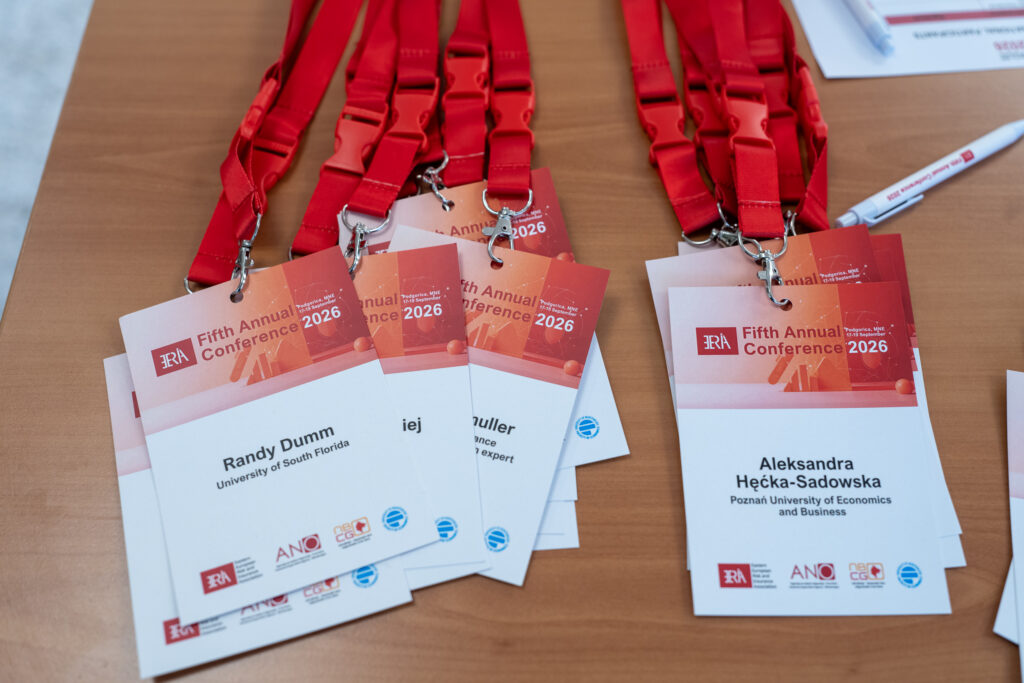
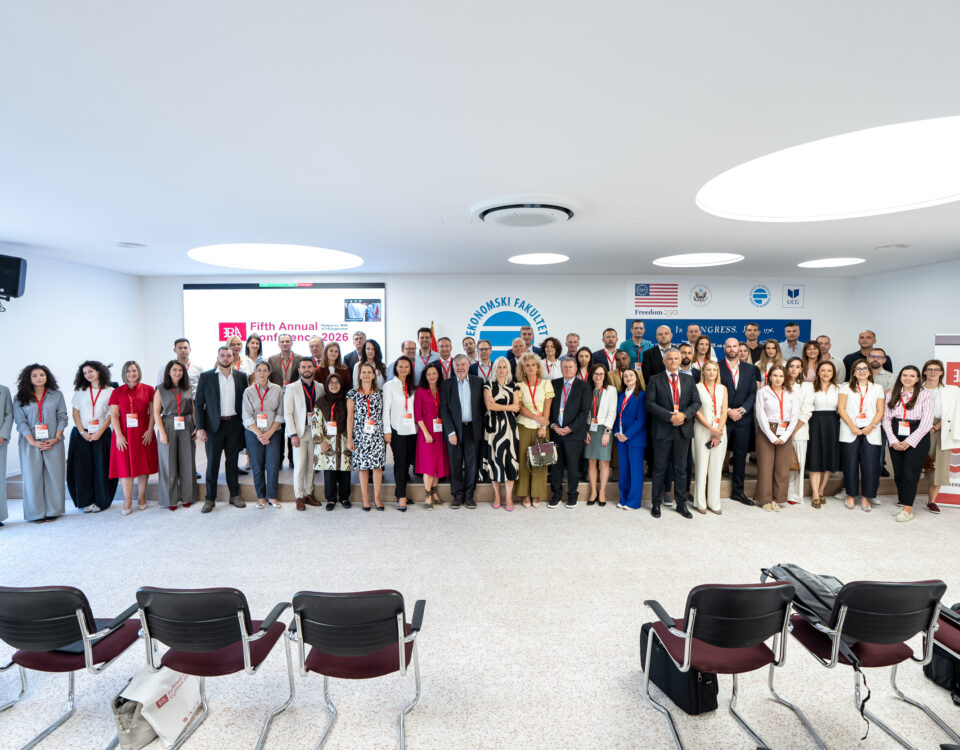
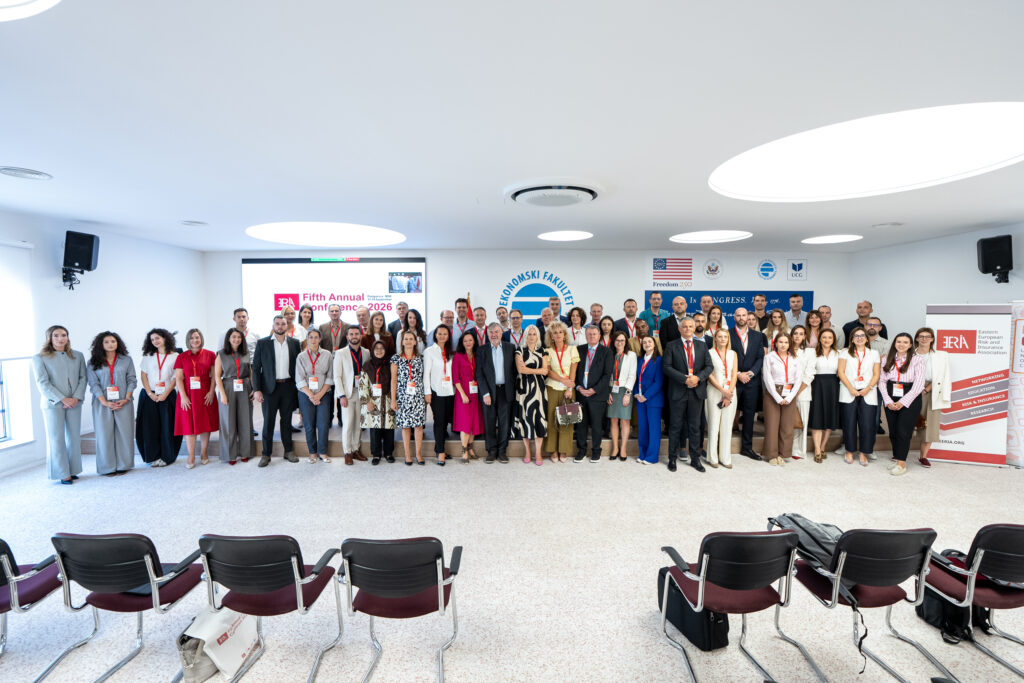
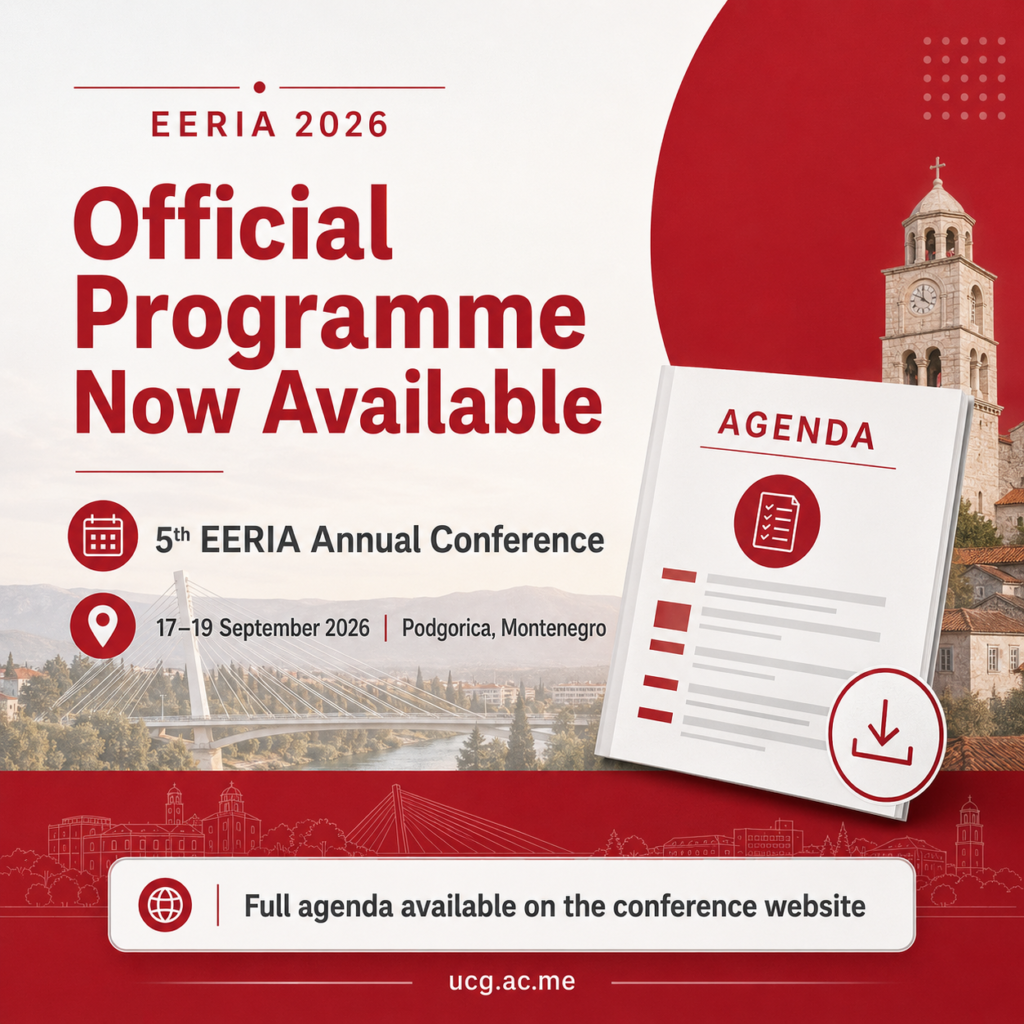
The Fifth Annual Conference of the Eastern European Risk and Insurance Association took place on 17–19 September 2026 at the Faculty of Economics, University of Montenegro in Podgorica.
Over three days, the conference brought together researchers, academics, regulators, supervisors and insurance professionals from across Europe and beyond, continuing EERIA’s mission of creating a platform where academic research meets regulatory and industry experience. Participants joined the conference from countries across Europe, as well as from the United States, India and Indonesia, giving this year’s meeting a particularly international character.
The conference began on Thursday evening with a Welcome Reception at the Faculty of Economics. It was an opportunity to reconnect with long-standing colleagues, welcome new participants to the EERIA community and start conversations that would continue throughout the following days.
Opening Ceremony
The main conference programme began on Friday with the official Opening Ceremony. Participants were welcomed by Mijat Jocović, Dean of the Faculty of Economics, University of Montenegro; Branko Barjaktarović, Director of the Insurance Supervision Agency of Montenegro; and Klime Poposki, President of EERIA.
A special moment during the ceremony was the presentation of a commemorative plaque to Dean Mijat Jocović by EERIA President Klime Poposki, recognising the Faculty’s support and contribution to the successful organisation of the conference.
The opening reflected one of the central ideas behind EERIA conferences: bringing together the academic community, regulators, supervisors and the insurance industry to discuss the challenges facing insurance markets from different perspectives.
Keynote Speeches and Solvency II Panel
The professional programme opened with a keynote speech by Marko Ivanović, Chair of the Insurance Supervision Agency Council of Montenegro, who presented the main trends and developments shaping the Montenegrin insurance market. His contribution provided an important local and regional perspective on the evolution of insurance and supervision.
A major highlight of the conference was the contribution of Prof. Em. Karel Van Hulle of KU Leuven and Goethe University Frankfurt. His keynote, “Ten years of Solvency II: What has been achieved?”, offered an opportunity to reflect on a decade of experience with the European risk-based solvency framework and on the lessons that can be drawn for its future development.
The keynote was followed by the panel discussion “Experience with Solvency II”, moderated by Prof. Van Hulle. The panel brought together representatives of European and national supervision, professional associations and the insurance industry:
- Patrick Hoedjes, Head of Policy and Supervisory Convergence Department, EIOPA;
- Peter Braumüller, former Chairman of IAIS, EIOPA MoB, FMA Austria;
- Michael Brandstetter, Association of Austrian Insurance Companies;
- Branko Barjaktarović, Insurance Supervision Agency of Montenegro;
- Lidija Božović, CEO of UNIQA neživotno osiguranje AD Podgorica.
The discussion provided different perspectives on the practical experience with Solvency II and on the relationship between regulation, supervision and the day-to-day realities of the insurance business.
Research Paper Sessions
As always, academic research was at the heart of the EERIA conference. This year’s programme included four research paper sessions, reflecting the breadth of topics currently shaping insurance and risk research.
The first session, Insurance Markets, Investment and Financial Performance, focused on the functioning of insurance markets and the financial and investment dimensions of insurance activity.
The second session, Climate Risk, ESG and Sustainable Insurance, addressed some of the most rapidly developing areas of insurance research. Presentations examined climate risk, disaster risk financing, ESG reporting, biodiversity risk and the links between financial inclusion and environmental performance. The session was moderated by Prof. Adam Śliwiński of SGH Warsaw School of Economics.
Saturday morning continued with two parallel sessions. Technology, Data and Emerging Risks in Insurance, moderated by Milijana Novović Burić, explored issues including connected insurance, willingness to share data, cyber risk, artificial intelligence, fleet safety and innovative insurance mechanisms.
At the same time, Social, Behavioral and Institutional Perspectives on Risk, moderated by Aleksandra Hęćka-Sadowska, brought together research on health insurance, financial behaviour and driving risk, financial and insurance literacy, and institutional and compliance aspects of risk.
Together, the four sessions demonstrated how broadly insurance research is evolving — from traditional questions of markets and financial performance to sustainability, behavioural factors, digitalisation, data, AI and emerging risks.
Just as importantly, the sessions created room for discussion. Questions, comments and conversations frequently continued beyond the individual presentations, once again demonstrating the value of bringing researchers working on related topics together in one place.
Special Presentation: Understanding Uncertainty
Saturday’s academic programme opened with a special presentation by Prof. Randy Dumm, Director of The Baldwin Group School of Risk Management and Insurance at the University of South Florida. His presentation, “Uncertainty: Purpose, Opportunities, and Challenges,” broadened the discussion beyond individual insurance markets and technologies to one of the fundamental concepts underlying risk management itself. The presentation provided a fitting introduction to the final day of the conference and complemented the more specialised topics discussed throughout the research sessions.
The EERIA Community
The Annual Conference is about research and professional exchange, but it is equally about the community that has developed around EERIA. Coffee breaks, lunches, the Welcome Reception and the Conference Dinner provided plenty of opportunities to continue discussions in a less formal setting, meet colleagues from different countries and institutions and develop ideas for future research and cooperation.
Following the closing ceremony on Saturday, EERIA members also gathered for the Members’ Meeting, providing an opportunity to discuss the association and its future activities. The combination of formal sessions and informal interaction remains an important feature of EERIA events and an essential part of building lasting connections across the academic, regulatory and insurance communities.
Discovering Montenegro Together
The conference concluded with an excursion that allowed participants to discover some of Montenegro’s cultural heritage and spectacular landscapes. The journey began in Cetinje, the historic capital of Montenegro, with a visit to the King Nikola Museum, located in the former residence of Montenegro’s last sovereign.
Participants then continued towards the Kotor–Lovćen cable car, enjoying panoramic views over the mountains, coastline and the Bay of Kotor. The final destination was Perast, one of the most picturesque historic towns in the Bay of Kotor, where there was time to explore before gathering for lunch overlooking the bay.
It was an excellent way to conclude the conference: away from presentation rooms and formal sessions, but with conversations, friendships and new professional connections continuing throughout the day.
Looking Ahead
The Fifth EERIA Annual Conference once again demonstrated the value of bringing together research, regulation, supervision and industry within one international community. We are grateful to the Faculty of Economics, University of Montenegro, the Insurance Supervision Agency of Montenegro, the local organising team, our Scientific Committee, speakers, panellists, session chairs, authors and all participants who contributed to the success of the conference.
Special thanks go to Milijana Novović Burić and Milan Raičević, whose commitment and hospitality contributed greatly to making our days in Montenegro so enjoyable.
Five annual conferences have now created a growing network of people and institutions interested in advancing research and professional dialogue in insurance and risk. Podgorica added another important chapter to this journey.
And the journey continues. In 2027, the EERIA community will meet again in Armenia for the Sixth EERIA Annual Conference.
We look forward to seeing you there.